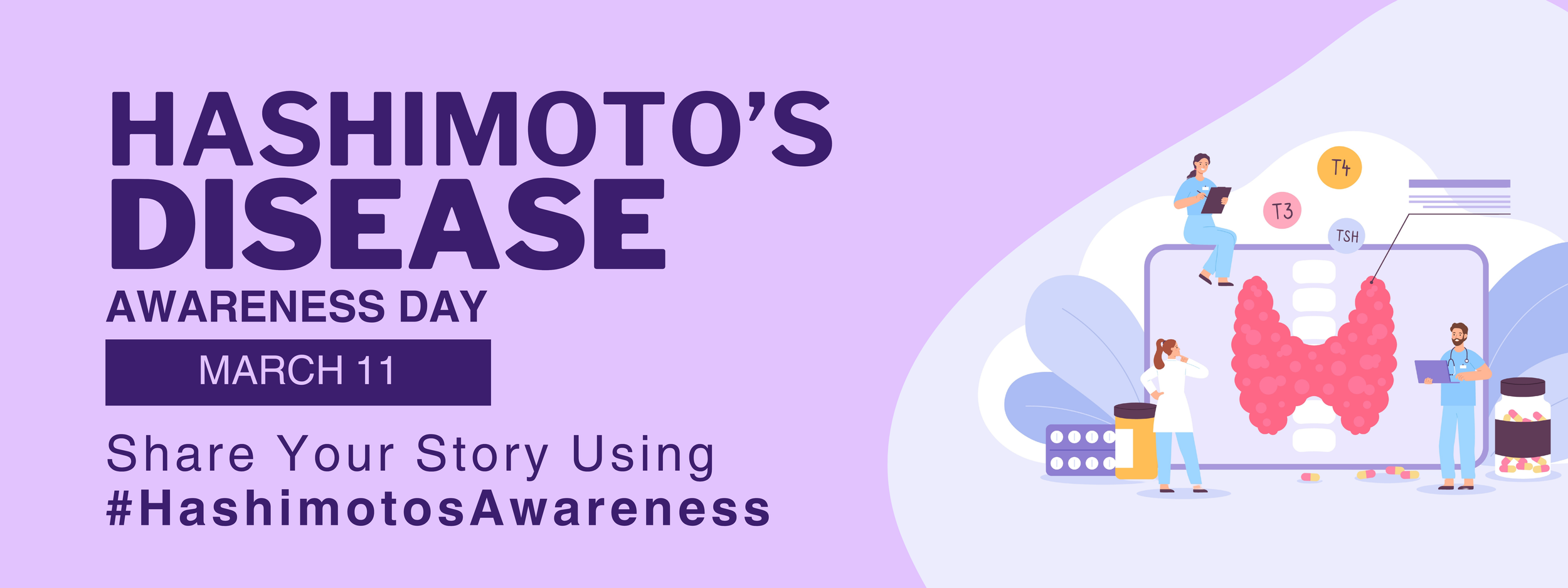
Hashimoto’s Awareness Day
We are recognize Hashimoto’s Disease Awareness Day on March 11 to bring attention to this often misunderstood autoimmune thyroid disorder. Our goal is to educate the public about Hashimoto’s thyroiditis, its symptoms, diagnosis, and treatment options, as well as to emphasize the importance of expert care for thyroid health.
Why Awareness Matters
Many people with Hashimoto’s disease go undiagnosed for years, suffering from symptoms that impact their quality of life. Hashimoto’s Disease Awareness Day seeks to change that by spreading knowledge and encouraging individuals to advocate for their thyroid health.
What is Hashimoto’s Disease?
Hashimoto’s disease is an autoimmune condition in which the immune system mistakenly attacks the thyroid gland, leading to chronic inflammation and, over time, hypothyroidism (an underactive thyroid). This can result in a range of debilitating symptoms and long-term health complications if left untreated.
Top 3 Things to Know About Hashimoto’s Disease
Hashimoto’s disease is a complex and progressive autoimmune condition that affects millions of people worldwide. While it is commonly associated with hypothyroidism, many people remain unaware of the early warning signs and long-term management strategies necessary for optimal thyroid health. Understanding the most critical aspects of this condition can empower individuals to seek timely medical intervention and take control of their health.

It’s the Leading Cause of Hypothyroidism: Hashimoto’s is the most common reason for an underactive thyroid. It accounts for the majority of hypothyroidism cases, affecting millions of people worldwide. The autoimmune attack on the thyroid gland gradually reduces its ability to produce hormones, leading to symptoms such as fatigue, weight gain, and depression. Early detection and intervention can prevent severe complications, but many individuals remain undiagnosed for years due to the slow progression of the disease.

It Progresses Over Time: Many people experience mild symptoms for years before developing full-blown hypothyroidism. The autoimmune process can be silent in its early stages, causing only minor fluctuations in thyroid function. However, over time, the thyroid gland becomes more damaged, leading to a significant decline in hormone production. This progression often results in worsening symptoms such as brain fog, dry skin, joint pain, and muscle weakness. Without proper monitoring, individuals may not recognize the severity of their condition until they develop serious metabolic imbalances.

It Requires Lifelong Management: While symptoms can be controlled with medication, Hashimoto’s is a chronic condition that needs regular monitoring. Thyroid hormone replacement therapy, typically with levothyroxine, is often necessary to maintain normal hormone levels. However, finding the right dosage requires ongoing adjustments based on lab results and symptom management. Additionally, lifestyle factors such as diet, stress management, and avoiding environmental triggers play a crucial role in minimizing symptom flare-ups and improving overall well-being.
The Connection Between Hashimoto’s Disease and Hypothyroidism
As Hashimoto’s disease progresses, the thyroid gland may lose its ability to produce adequate hormones, leading to hypothyroidism. This underproduction of thyroid hormones slows down the body's metabolism and can affect nearly every organ system. Since thyroid hormones are responsible for regulating energy levels, digestion, mood, and even body temperature, their deficiency can lead to widespread symptoms.
One of the primary concerns with hypothyroidism caused by Hashimoto’s disease is that it often develops gradually. In the early stages, thyroid hormone levels may fluctuate, causing alternating periods of hyperthyroid-like symptoms (such as anxiety and weight loss) followed by hypothyroid symptoms (such as fatigue and weight gain). Over time, however, the thyroid gland becomes damaged and is unable to produce sufficient hormones, leading to full-blown hypothyroidism.
Effects of Hypothyroidism on the Body
Metabolic Slowdown: Low thyroid hormone levels slow down metabolism, leading to unexplained weight gain, increased cholesterol levels, and difficulty losing weight.
Fatigue and Weakness: A decrease in thyroid function leads to chronic tiredness, muscle weakness, and a general sense of sluggishness.
Cognitive Decline: Hypothyroidism can impair concentration, memory, and cognitive function, commonly referred to as "brain fog."
Mood Changes: Depression, irritability, and anxiety are common in individuals with untreated hypothyroidism.
Digestive Issues: Slow digestion may lead to constipation, bloating, and discomfort.
Temperature Sensitivity: People with hypothyroidism often feel cold, even in warm environments.
Cardiovascular Risks: Low thyroid function can contribute to high blood pressure, increased cholesterol levels, and a higher risk of heart disease.
Skin, Hair, and Nail Changes: Dry skin, brittle nails, and hair thinning are all common symptoms of hypothyroidism.

FAQ
-
Hashimoto’s disease is an autoimmune condition in which the immune system mistakenly attacks the thyroid gland, leading to chronic inflammation and, over time, hypothyroidism (an underactive thyroid). This can result in a range of debilitating symptoms and long-term health complications if left untreated.
-
Many people with Hashimoto’s disease experience symptoms for years before receiving a proper diagnosis. Common symptoms include:
Fatigue and sluggishness
Weight gain
Depression and mood changes
Dry skin and brittle nails
Hair thinning or hair loss
Cold intolerance
Joint and muscle pain
Puffy face
Constipation
-
While the exact cause of Hashimoto’s disease is unknown, several factors contribute to its development, including:
Genetics: A family history of thyroid disorders or other autoimmune diseases increases the risk.
Hormonal Factors: Hashimoto’s is more common in women, suggesting that sex hormones may play a role.
Chronic Stress: Prolonged stress can impact immune function and trigger autoimmune responses.
Environmental Triggers: Exposure to certain toxins, infections, or excessive iodine intake may contribute to disease onset.
-
A proper diagnosis of Hashimoto’s thyroiditis requires specific tests, including:
Thyroid function tests (TSH, Free T4, Free T3) to assess hormone levels.
Thyroid antibody tests to detect thyroid peroxidase (TPO) antibodies, which indicate an autoimmune attack on the thyroid.
Thyroid ultrasound to evaluate the structure and health of the thyroid gland.
-
Yes, Hashimoto’s disease is significantly more common in women than in men. Women are estimated to be 7 to 10 times more likely to develop this autoimmune thyroid disorder. Hormonal fluctuations, particularly those related to puberty, pregnancy, and menopause, may contribute to the increased prevalence in women.
-
Yes, untreated Hashimoto’s disease can negatively impact fertility. Since the thyroid regulates metabolism and plays a crucial role in reproductive health, hypothyroidism caused by Hashimoto’s can lead to irregular menstrual cycles, ovulation issues, and difficulty conceiving. Proper thyroid hormone management is essential for women trying to conceive, as untreated hypothyroidism can increase the risk of miscarriage and pregnancy complications.
-
Hashimoto’s disease has a strong genetic component. Individuals with a family history of thyroid disease or other autoimmune disorders (such as type 1 diabetes, rheumatoid arthritis, or lupus) are at a higher risk of developing Hashimoto’s. While genetics play a significant role, environmental triggers such as stress, infections, and excessive iodine intake can also influence the onset of the disease.
What Age Groups Are Most Commonly Affected?
Hashimoto’s disease can develop at any age, but it is most commonly diagnosed in middle-aged women, typically between the ages of 30 and 50. However, it can also affect teenagers and young adults, especially those with a family history of autoimmune disorders.
-
Hashimoto’s disease can develop at any age, but it is most commonly diagnosed in middle-aged women, typically between the ages of 30 and 50. However, it can also affect teenagers and young adults, especially those with a family history of autoimmune disorders.
-
Hashimoto’s disease itself does not directly cause thyroid cancer, but having Hashimoto’s may slightly increase the risk of developing thyroid cancer, particularly papillary thyroid cancer. Long-term inflammation from Hashimoto’s can lead to changes in the thyroid gland, and nodules may develop. While most thyroid nodules are benign, it’s important to monitor them with regular thyroid evaluations.
-
Hashimoto’s is an autoimmune disease, meaning the immune system mistakenly attacks the thyroid. While it primarily affects thyroid function, people with Hashimoto’s may have a slightly higher risk of developing other autoimmune conditions, such as:
Celiac disease
Rheumatoid arthritis
Type 1 diabetes
Lupus
Some studies suggest an association between Hashimoto’s and lymphoma of the thyroid, but this is extremely rare. Regular follow-ups with your doctor can help detect any concerning changes early.
-
Yes, it is possible to have Hashimoto’s disease while maintaining normal thyroid hormone levels, especially in the early stages. Hashimoto’s is an autoimmune disorder, meaning the immune system attacks the thyroid gland, often long before thyroid hormone production is affected. Many people with Hashimoto’s have elevated thyroid peroxidase (TPO) antibodies but normal TSH, free T4, and free T3 levels. This is sometimes referred to as euthyroid Hashimoto’s and may not cause noticeable symptoms at first. However, over time, ongoing inflammation can lead to hypothyroidism.
-
Hashimoto’s disease typically progresses through four main stages:
Silent Autoimmunity – The immune system starts attacking the thyroid, but there are no noticeable symptoms. TPO antibodies may be elevated, but thyroid hormone levels remain normal.
Subclinical Hypothyroidism – TSH levels begin to rise as the thyroid struggles to produce enough hormones, but free T4 and free T3 remain in the normal range. Some mild symptoms may develop, such as fatigue or cold intolerance.
Overt Hypothyroidism – The thyroid can no longer compensate, leading to high TSH and low free T4/free T3. Symptoms become more pronounced, including weight gain, hair thinning, depression, and sluggish metabolism.
Advanced Hashimoto’s (Atrophic Thyroiditis) – Over time, the thyroid gland shrinks (atrophies) due to chronic inflammation. At this stage, thyroid hormone production is significantly impaired, and lifelong thyroid hormone replacement is needed.
-
While Hashimoto’s and Graves’ disease are both autoimmune thyroid disorders, they typically result in opposite thyroid dysfunctions: Hashimoto’s leads to hypothyroidism, while Graves’ leads to hyperthyroidism. However, in rare cases, a person with Hashimoto’s may develop Graves’ disease or vice versa. This can occur when the immune system starts producing TSH receptor-stimulating antibodies, temporarily triggering an overactive thyroid. Some individuals experience Hashitoxicosis, a phase where inflammation causes thyroid hormone levels to spike before progressing into hypothyroidism.
-
Yes, Hashimoto’s disease and PCOS often coexist, as both conditions involve hormonal imbalances. Links include:
Insulin resistance – Common in PCOS, which can worsen thyroid function
Estrogen dominance – High estrogen levels can increase thyroid antibody production
Low progesterone – Can contribute to both irregular cycles and thyroid dysfunction
Other hormonal disorders associated with Hashimoto’s include:
Adrenal insufficiency (low cortisol)
Low testosterone and DHEA
Menstrual irregularities and infertility
-
Yes, some supplements can interfere with thyroid hormone absorption:
Iron and calcium – Compete with thyroid medication; take 4+ hours apart
Biotin – Can distort thyroid lab results; stop 48 hours before testing
Selenium and zinc – Support thyroid function but should be taken separately from medication
Iodine – May worsen Hashimoto’s in some cases
-
While there is no cure for Hashimoto’s disease, it can be effectively managed with the right treatment plan. Treatment options may include:
Thyroid hormone replacement therapy (Levothyroxine) to normalize hormone levels.
Regular monitoring of thyroid function to adjust medication as needed.
Dietary and lifestyle changes, such as reducing stress, avoiding inflammatory foods, and ensuring adequate iodine intake.
Surgical intervention in cases where a goiter (thyroid enlargement) causes difficulty swallowing or breathing.
-
Hashimoto’s can usually be effectively managed with the right treatment plan including thyroid medication. Early diagnosis and intervention are key to preventing complications and improving quality of life. Hashimoto’s Disease cannot be cured without surgically removing the entire thyroid gland.
-
Hashimoto’s disease can significantly impact a person’s quality of life due to its wide-ranging symptoms. Chronic fatigue, brain fog, depression, weight fluctuations, and muscle pain can make daily tasks more challenging. If left untreated, Hashimoto’s-related hypothyroidism can lead to severe complications such as heart disease, infertility, and myxedema (a rare, life-threatening condition due to extremely low thyroid hormone levels). However, with proper diagnosis, treatment, and lifestyle management, individuals with Hashimoto’s can lead healthy and fulfilling lives.
-
While lifestyle changes such as maintaining a healthy diet, reducing stress, and avoiding inflammatory foods can help manage symptoms, Hashimoto’s disease typically requires medical treatment once hypothyroidism develops. Natural interventions alone are usually insufficient to regulate thyroid hormone levels in cases of significant hormone deficiency. Patients should work closely with a healthcare provider to develop a comprehensive treatment plan.
-
The standard treatment for Hashimoto’s-induced hypothyroidism is thyroid hormone replacement therapy with levothyroxine (Synthroid, Levoxyl, Tirosint). This synthetic thyroid hormone restores normal hormone levels, alleviating symptoms and preventing complications. Some patients may benefit from a combination of T3 (liothyronine) and T4 therapy for more precise symptom management.
-
Yes. Treatment for Hashimoto’s disease must be personalized based on factors such as age, symptom severity, thyroid function test results, and individual response to medication. Dosages of thyroid hormone replacement therapy are adjusted based on TSH and free T4 levels, and regular monitoring is required to ensure optimal management.
-
In some cases, patients may continue to experience symptoms despite taking thyroid hormone replacement therapy. This may be due to:
Inadequate dosing that needs adjustment
Poor absorption of levothyroxine due to gastrointestinal conditions
Underlying autoimmune inflammation that continues to affect overall well-being
The need for combination therapy (adding T3 hormone for symptom relief)
If symptoms persist despite proper medication use, patients should work with an experienced thyroid specialist to reassess their treatment approach. In these cases, surgery may be required to remove the entire thyroid gland.
-
Surgery is not typically required for Hashimoto’s disease unless:
A large goiter is present, causing difficulty breathing or swallowing
Thyroid nodules are detected and require further evaluation for malignancy
There is suspicion of coexisting thyroid cancer
The patient experiences significant, persistent symptoms despite medication and lifestyle management
-
Only about 10% of patients with Hashimoto’s Disease will need surgery. The other 90% typically do well managing their disease through medication.
-
The frequency of thyroid evaluations depends on your symptoms, hormone levels, and any changes in your thyroid. In general:
At least once a year: A thyroid function test (TSH, free T4, and possibly free T3) and antibody levels should be checked.
More frequently if symptoms change: If you experience new or worsening symptoms such as fatigue, weight gain, or hair loss, your doctor may recommend testing every 3-6 months.
Ultrasound monitoring: If you have thyroid nodules or an enlarged thyroid (goiter), your doctor may suggest an ultrasound every 6-12 months.
-
Yes, Hashimoto’s disease is a chronic, lifelong condition. While there is no cure, it can be effectively managed with medication and lifestyle changes. Many people with Hashimoto’s take levothyroxine (a synthetic thyroid hormone) to maintain normal thyroid function. Managing stress, eating a balanced diet, and avoiding iodine or gluten (if sensitive) may also help reduce symptoms. Regular monitoring is essential to ensure your thyroid function remains stable over time.
-
TPO and TG antibody testing is most useful at diagnosis to confirm Hashimoto’s disease, but routine monitoring is not always necessary. Once diagnosed, TPO and TG antibody levels do not directly correlate with disease severity or symptoms. However, in some cases, rechecking antibody levels may be helpful:
If symptoms significantly worsen, to assess increased immune activity.
If a patient is trying a new treatment approach (such as dietary changes or LDN) and wants to monitor immune response.
If thyroid nodules develop, as elevated TG antibodies may be associated with thyroid cancer risk.
-
Inflammation is a central factor in Hashimoto’s disease, as the immune system attacks the thyroid, leading to chronic tissue damage. Inflammation can be tracked through lab markers, including:
TPO and TG antibodies – Indicate autoimmune activity
C-reactive protein (CRP) and ESR (erythrocyte sedimentation rate) – General inflammation markers
Reverse T3 (rT3) – Can indicate stress and inflammation affecting thyroid hormone conversion
Thyroid ultrasound – Can show signs of inflammation, such as increased blood flow and tissue irregularities
Reducing inflammation through diet, stress management, and gut health improvement may help slow disease progression.
-
Levothyroxine (T4-only therapy, Synthroid, Levoxyl, Tirosint)
Standard treatment
Must be converted to T3 (active hormone) in the body
Works well for most people, but some struggle with conversion
Combination Therapy (T3/T4 or Natural Desiccated Thyroid - NDT)
Includes both T4 and T3 (e.g., Cytomel, Armour, NP Thyroid)
May help those who don’t convert T4 efficiently
Some patients report better energy and metabolism
The best treatment depends on individual response, lab results, and symptoms.
-
Low-dose naltrexone (LDN) is an emerging treatment that may help reduce inflammation and autoimmune activity. Some studies and patient reports suggest LDN:
Reduces thyroid antibodies
Decreases inflammation
Improves fatigue and brain fog
While promising, LDN is not a first-line treatment, and more research is needed. Some functional medicine doctors prescribe it as part of a broader Hashimoto’s treatment plan.
Hashimoto’s Awareness

-
Hashimoto’s disease is the most common cause of hypothyroidism, yet it remains widely misunderstood and often undiagnosed for years. Many patients are dismissed when they report symptoms like fatigue, weight gain, brain fog, and depression, leading to unnecessary suffering and delayed treatment.
Hashimoto’s Disease Awareness Day was created to educate, advocate, and empower. By raising awareness, we can help more people:
Recognize the symptoms early and seek proper testing.
Understand that Hashimoto’s is an autoimmune disease, not just a slow thyroid.
Know when to seek expert care to avoid long-term complications.
Awareness leads to earlier diagnoses, better treatment, and improved quality of life. No one should struggle in silence with a condition that can be managed with the right care.
-
You can help spread awareness and support those living with Hashimoto’s:
Share Your Story – If you or a loved one has Hashimoto’s, sharing your experience can help others feel less alone. Use #HashimotosAwarenessDay to connect with the community.
Educate Yourself and Others – Many people, including some healthcare providers, don’t fully understand Hashimoto’s. Learn the facts and share them to help others get the care they need.
Advocate for Testing – Encourage friends and family experiencing symptoms to ask for comprehensive thyroid testing, including thyroid antibodies, TSH, T3, and T4.
Follow and Support Experts – Stay informed by following trusted sources like the Clayman Thyroid Center and Goiter Guru for accurate information and expert insights.
-
Hashimoto’s symptoms can be subtle and dismissed by doctors who only check TSH levels. If you feel unwell despite being told your labs are "normal," push for further testing.
Stay vigilant by:
Keeping track of your symptoms and how they change over time.
Asking for full thyroid panels, including TPO antibodies, if you suspect Hashimoto’s.
Seeking a second opinion if you feel unheard or misdiagnosed.
Your health matters, and you deserve answers. Awareness is the first step to better care, and together, we can help ensure no one with Hashimoto’s suffers in silence.